
Life Insurance Family Loans
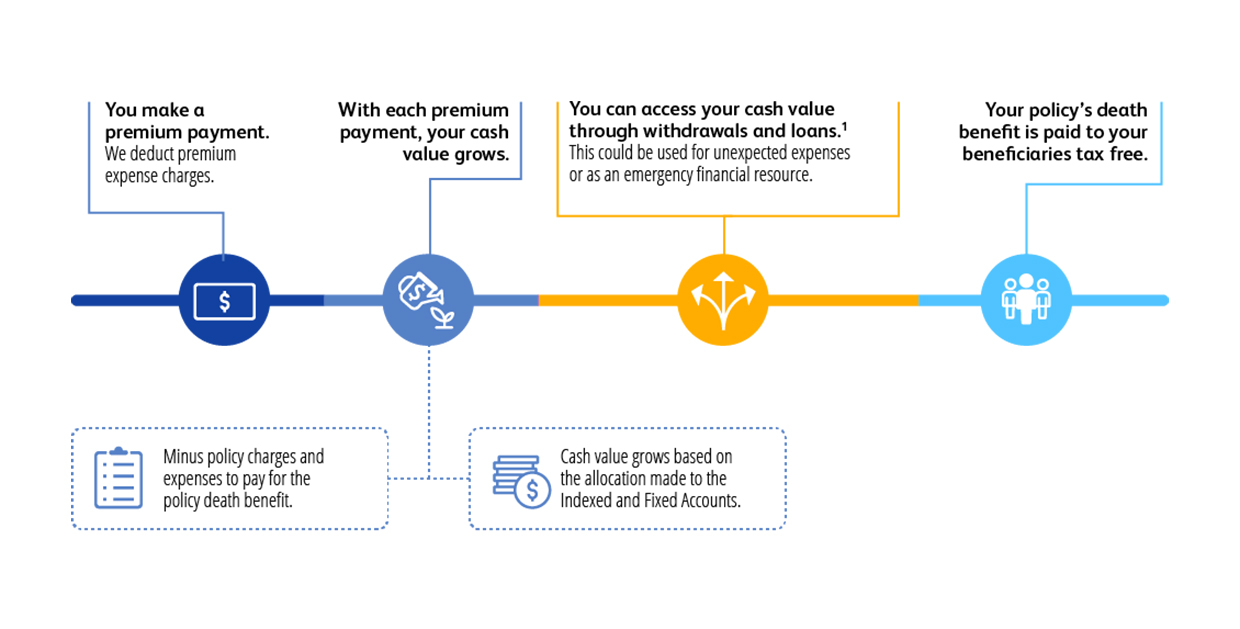
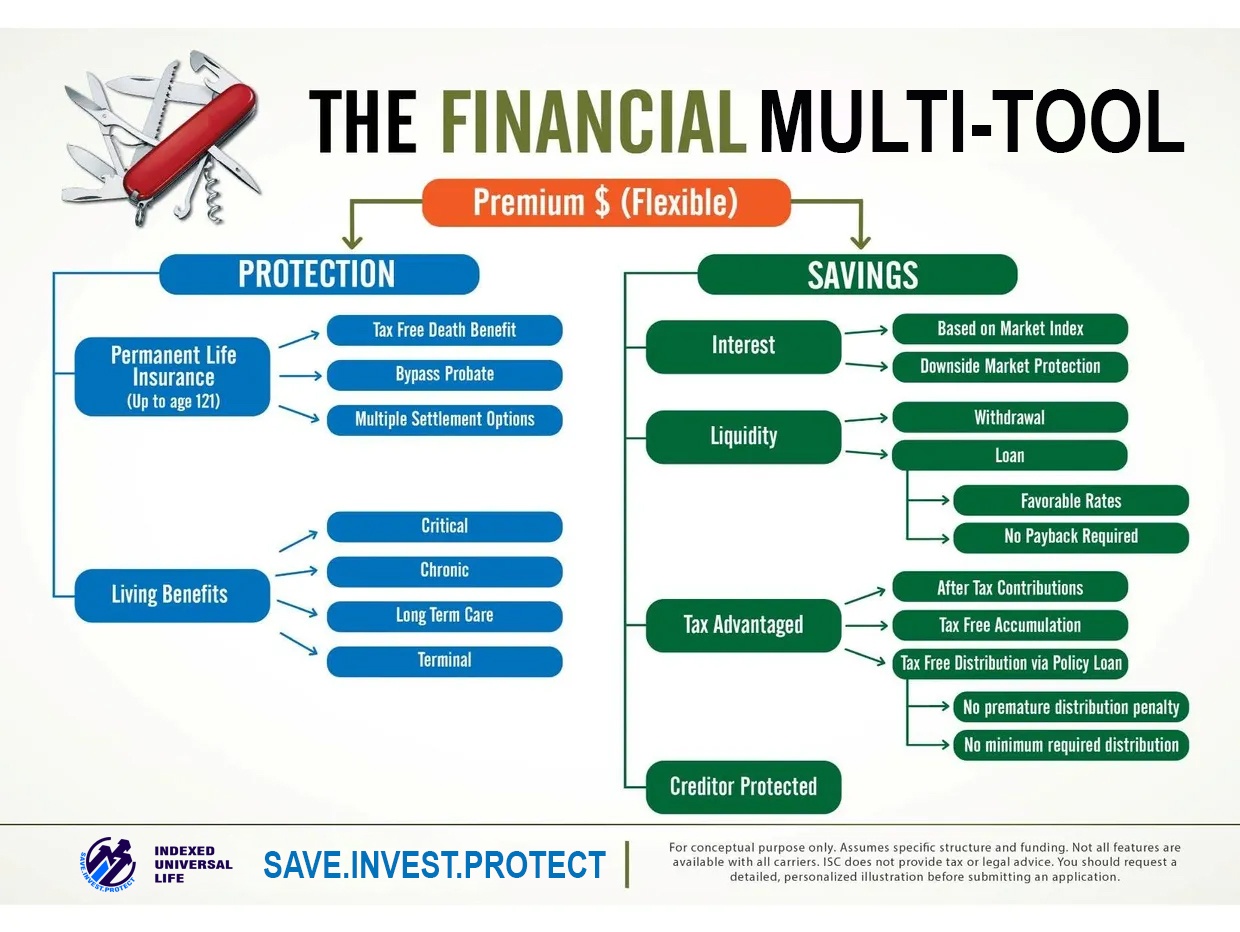
One of the major advantages of a permanent life insurance policy is the ability to access the cash value without incurring taxes. This benefit also allows you to utilize up to 100% of the cash value of your policy.
How Does Family Loan Impact Your Policy?
A major advantage of owning an permanent life insurance policy is the ability to access your policy’s cash value without paying taxes. You can even use up to 100% of the accumulated cash value in some cases. Thanks to specific IRS provisions, you can access the cash value tax-free through a policy loan. Permanent life insurance policies offer several types of loans, including:
- Variable
- Fixed
- Indexed
Fixed Loans
A fixed loan allows you to borrow against your policy, with the insurance company charging a fixed interest rate on the borrowed amount. For every dollar you borrow, an equal amount of your policy’s cash value is moved into a “collateral” account. The insurance company guarantees that this collateral account will earn a specified rate of return.

Indexed IUL Loans
With an indexed loan, the borrowed funds continue to follow the performance of the underlying index(es) rather than being placed in a collateral account. The collateral for your loan remains tied to the movement of the selected index(es). Typically, the interest rate charged by the insurance company on an indexed loan is higher than that of a fixed loan.
Variable IUL Loans
Variable loans are similar to indexed loans, as the borrowed funds also track the underlying index(es). However, the interest rate on a variable loan is often lower than that of an indexed loan since the insurer is not obligated to a guaranteed rate. Despite this, variable loans may still carry a higher interest rate compared to fixed loans, as the collateral is usually invested in riskier assets than cash.
“

Get personalized, free, no-obligation life insurance quotes. Enter your information, check eligibility, and speak with an agent if you need guidance. It costs $0 to find coverage that fits your budget. Compare prices and options in minutes and receive term life insurance estimates in as little as 5 minutes.
What is a “Key Person Insured Fund”?
A Key Person Insured Fund is a strategic life insurance solution designed to protect businesses against the financial impact of losing a key individual. By insuring the life of a critical employee—such as a founder, top executive, or specialist—the company ensures it receives a financial payout in the event of their death.
This fund provides more than just protection: it can help cover outstanding loans, operational expenses, and other urgent financial obligations, keeping the business stable while navigating the loss. When structured as a permanent life insurance policy, the fund can even accumulate cash value, giving the company flexible access to resources when needed.
In short, the Key Person Insured Fund safeguards both the people who drive your business and the financial health of the company, offering peace of mind and continuity no matter what challenges arise.
How Does Key Person Insured Fund Work?
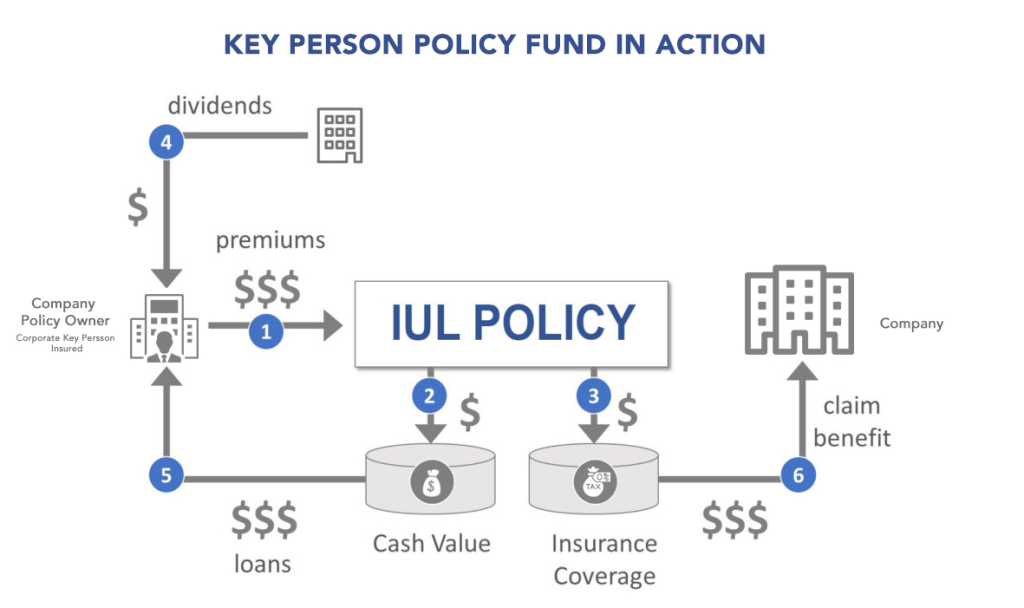
A Key Person Insured Fund is a personal finance strategy that leverages a cash value policy like an IUL policy as a “personal bank.” This includes taking loans against the policy and growing cash flow through the insurance’s dividends.
The core of this concept is a cash value life insurance policy. Once a policy is in place, for example, it is possible for a company to access money using the cash value as collateral. That avoids paying higher interest to lending institutions since the company as policyholder has access to its own funds. It allows very fast access, which are just a call away.
Typically, a indexed universa life insurance policy is used for the Key Person Insured Fund concept. Participating life insurance means that a policy pays dividends, which allow contribution towards the cash value of the policy or to pay a part of insurance premiums.
A simple visual below highlights the key elements of the Key Person Insured Fund concept.
How to Start A Key Person Life Insurance Policy and Fund
To begin, a company needs to work with a life insurance broker who can access a variety of cash value life insurance policies and help you choose the best option for the company needs (considering premium rates, coverage, and dividend potential). The broker will create a financial plan focused on the key person policy and fund and guide the company through the process of setting up the policy.
In the USA, establishing a key person policy involves selecting a cash-value life insurance policy, funding it with premiums, and structuring it to maximize cash value growth. This strategy enables companies to use the accumulated cash value as a financing tool for various purposes, such as investments, office renovations, or supplemental emergency funds.
Is There a Minimum Insurance Policy Size for a Key Person Insurance Policy and Fund?
While there’s no strict minimum policy size, this strategy generally works better for larger accumulated cash values, and the premiums reflect that. Tipically a larger cash surrender value provides better opportunities to obtain favorable loan terms.
Building Multi-Generational Wealth with Permanent Life Insurance Policies
Many affluent individuals leverage the concept of a Key Person Insurance Policy and Fund to grow multi-generational wealth in their personal lives by substituting corporate ownership with a trust ownership structure. The structure remain the same but a Trust takes ownership of the policy while the beneficiaries of death and living benefits are typically family members . This strategy can be highly effective when certain key conditions are met.
One essential factor is securing a permanent life insurance policy at reasonable rates. If premiums are too high—for example, due to health conditions—the strategy may not achieve its full potential.
Another critical requirement is having a stable financial foundation with a consistent income stream, as premiums for a substantial policy can be significant. Maintaining premium payments is essential to keep the policy in force, and many financial advisors recommend allocating up to 10% of your income toward your IUL policy.
Finally, a solid understanding of financial concepts such as compound interest, policy loans, and the growth potential of a policies is important, along with the discipline to manage the policy effectively to maximize long-term benefits.
A life insurance policy and fund Pros and Cons
There are a number of pros and cons associated with establishing a fund based on a permanent life insurance policy .
| Pros of a permanent life insurance fund | Cons of a permanent life insurance fund |
| Ability to have your “own funds” and access to money without paying interest to the 3rd party lenders. | Costs of the insurance policy. |
| No need to go through a long lending process if a you need money. | Not a good choice for those looking for short-term results as it takes years to accumulate a meaningful cash value to borrow against. |
| Ability to grow the cash value of a policy even faster with a participating whole life insurance policy that pays benefits. | Not a good choice for people who can not easily get access to an insurance policy (e.g. due to health pre-conditions). |
| Ability to select unstructured payment instead of a predefined payment plan. | You need to have a very solid understanding of the infinite banking concept since there is a chance, because it is along-term strategy, that an advisor who set it up for you will not be there after several years. |
| You continue to accumulate interest on the entire cash value even if you borrowed against it. | The interest on a policy loan must be lower than earnings. Variable loans interest range from 4%-6% with returns intrest ranging from 6%-12%. Each loan affects future earning potential. |
| Ability to benefit from an array of financial benefits e.g. lower interest rates, lack of market volatility, lack of penalty or late payment fees, etc. | Any policy loan in excess of the adjusted cost basis of the life insurance policy will be 100% taxable to the individual. |
| You continue accumulate interest on the entire cash value even if you borrowed against it. |
Is there an advantage to using a Mutual Insurance company vs a Public Insurance Company when setting up a permanent cash value insurance policy and fund?
Choosing a mutual insurance company over a public insurance company for setting up an Infinite Banking concept (IBC) can offer advantages such as a customer-centric approach and potentially better policy terms, like higher dividends and lower premiums. Mutual insurers, owned by policyholders, often prioritize stability and long-term satisfaction. In contrast, public insurers, accountable to shareholders, may prioritize profit motives, potentially resulting in higher costs or less favorable terms.
Top-rated insurance companies offering Indexed Universal Life (IUL) policies
A professional licensed insurance agent’s role is to assist you in selecting an appropriate provider and customizing a policy to meet your specific needs.